About Us

Mapping Peatland Condition at Scale, One Pixel at a Time.

Over 20% of Ireland is covered by peat. When in good condition, peatlands host specially adapted flora and fauna, lock carbon into their soil, filter rainwater, buffer against flooding, and release water slowly enough to ease drought. They are, in short, some of the most quietly essential ecosystems on Earth. Unfortunately it is estimated that over 80% of Irish peatlands are in bad condition.

Continuously assessing peatland condition is important for many reasons: to identify if restoration efforts are effective, to identify arising pressures (e.g. peatslides, fire, illegal turf extraction), and ultimately to select which areas would require the highest attention.

The traditional boots-on-the-ground approach to assess peatland condition cannot satisfy such assessment requirements alone. There is a need for a quick, cost-effective and scalable approach to peatland condition mapping ; a “first-scan” so to speak ; so that boots-on-the-ground can be deployed where they matter the most.

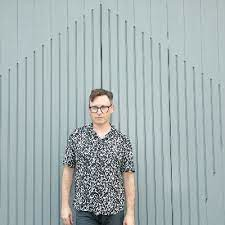
Corrado Grappiolo · AI2Peat
Watch the full “10 Things to Know About” episode about AI2Peat on RTÉ Player →
Our mission

At AI2Peat, we believe that protecting Ireland’s peatlands begins with seeing them clearly. By pairing artificial intelligence with satellite imagery, in-situ sensors, and the knowledge of ecologists in the field, we turn fragmented data into a shared, living map empowering everyone from researchers to conservation officers to act with confidence.

How does it work?

We combine remote sensing, artificial intelligence and ecological expertise to infer aspects of peatland condition at any scale - from local site to national level, from weekly updates to seasonal to multi-year. We provide bespoke assessment at a click putting the power of remote sensing, AI and ecological expertise directly in the hands of the people who need it most.

Our Vission

we live in a climate crisis. We do not inherit this planet from our ancestors we borrow it from our future generations. We envision a world in which humans can thrive in symbiosis with Nature. A world in which peatlands are valued for the vastness of the services they provide. To get there, we need to know their condition, continuously and reliably, so that the right corrective measures can be taken at the right time.

Our Values

  • Nature is our main stakeholder. Every decision we make — about what we build, the tools we use, and who we partner with — is measured against one question: will Nature benefit from it?
  • Collaboration is our greatest force multiplier. No single organisation, discipline, or dataset can solve the peatland crisis alone. We believe the biggest environmental and societal outcomes come from working together.
  • Our AI models work together with humans, not instead of them. We are not here to replace the ecologists in the field, the scientists in the lab, or the people that relentlessly work in preserving our habitats and know every single square cm of them. Our AI models are built to amplify that expertise, by providing them with the bespoke information they need to be even more effective in their work.

Project phases

Our Story

From early research and stakeholder workshops to national-scale mapping and on-demand ecological services, AI2Peat continues to grow into a platform built for real-world peatland restoration.

  1. Concept Phase

    6 months2 Jan 2023 – 30 Jun 2023

    AI2Peat starts on 2 January 2023, funded by Science Foundation Ireland, now Research Ireland, under the National Challenge Fund Future Digital Challenge. On 22 May 2023, the team holds an ideation workshop to explore peatland monitoring challenges and stakeholder needs. The Concept Phase ends on 30 June 2023.
  2. Seed Phase

    12 months1 Jul 2023 – 30 Jun 2024

    The Seed Phase focuses on prototyping the platform. On 1 September 2023, AI2Peat reaches its first public-facing Hello World moment. On 4 March 2024, work around a common definition of peatland condition progresses, and the first all-Ireland raised bog ecology map goes live.

  3. Grow Phase

    12 months1 Jul 2024 – 30 Jun 2025

    On 1 July 2024, AI2Peat is awarded EUR 500k and enters the Grow Phase. During 2024, the emission factor calculator v1.0 and the all-Ireland raised bog ecology map v2.0 are developed. In November 2024, AI2Peat and Peatland Finance Ireland begin collaborating on the Specific Yield on-demand service.

  4. Prize Phase

    24 months1 Jul 2025 – 1 Jul 2027

    On 1 July 2025, AI2Peat is awarded EUR 1M and enters the Prize Phase. During this phase, AI2Peat moves toward deployment, on-demand services expand, the emission factor calculator v2.0 is planned as an on-demand service, and the platform is fully consolidated under ai2peat.ie.

  1. 2023
    AI2Peat launched with Research Ireland funding
  2. 2024
    AI2Peat beta platform opens to researchers
  3. 2025
    ESA LPS Sustainable Horizons finalist
  4. 2025
    AI Awards finalist — Best AI in Sustainability
  5. 2027
    Full national condition map targeted
Service categories

What we offer

AI2Peat delivers on-demand services built on remote sensing and AI : giving landowners, agencies, and researchers reliable peatland intelligence at any scale, anywhere in Ireland.

Loading map…

Remote sensing-driven, AI-generated maps : anytime, anywhere.

We leverage Earth observation data from 2017 to the present, enabling temporal trend analysis and forward-looking forecasts. Our models generalise across different geographies and are deployed on a computational platform built for quick and cost-effective inference. Every output is rigorously validated through manual expert review before it reaches you.

↗ Learn more
Specific Yield time-series animation

Hydrology analysis.

Our Specific Yield on-demand service enables you to understand how your bog responds to rain events, in accordance with Peatland Finance Ireland's standard for Ireland.

↗ Learn more
Emission scoping animation

GHG Emission estimation.

Our GHG emission estimation on-demand service enables you to estimate GHG emissions on raised bogs, in accordance with Peatland Finance Ireland's standard for Ireland.

↗ Learn more
Coming soon

On-demand computation.

If you have in-house expertise and simply need our maps, our on-demand inference is one click away. Access our models directly, on your terms, without any overhead.

Coming soon
Request a bespoke service

Bespoke condition mapping.

Don't see what you need? We build it with you. Through continuous engagement, we develop new capabilities tailored to your specific needs whether that means a new condition indicator, a new geography, or an entirely new analytical approach.

↗ Request a service

Our team

The researchers, engineers, and ecologists behind AI2Peat.

Dr. Corrado Grappiolo

Dr. Corrado Grappiolo

Project Lead · CeADAR, Ireland's Centre for Applied AI

Corrado leads the AI2Peat project from CeADAR Ireland's Centre for Applied AI : where he has spent years turning machine learning research into working systems that solve real problems. At AI2Peat, he brings together satellite data, AI models, and ecological expertise into a single platform that makes the condition of Ireland's peatlands visible for the first time at a national scale.

Dr. Eoghan Holohan

Dr. Eoghan Holohan

Co-Lead · iCRAG, SFI Centre for Applied Geosciences

Eoghan is a geoscientist at iCRAG whose research on Earth surface processes has taken him from Irish bogs to volcanic landscapes overseas. At AI2Peat he bridges the geological and ecological sides of peatland science making sure the map we build reflects the physical reality of the ground beneath, not just what's visible from space.

Dr. Shane Regan

Dr. Shane Regan

Societal Impact Champion · National Parks and Wildlife Service

Shane is a peatland ecologist with Ireland's National Parks and Wildlife Service and the project's bridge to frontline conservation. Having spent years restoring Irish bogs wading through them in wellies as often as sitting at a desk he keeps AI2Peat grounded in the practical needs of the people actually managing these landscapes.